








What Are FRP Camper Trailer Panels? A Builder's Introduction
Introduction
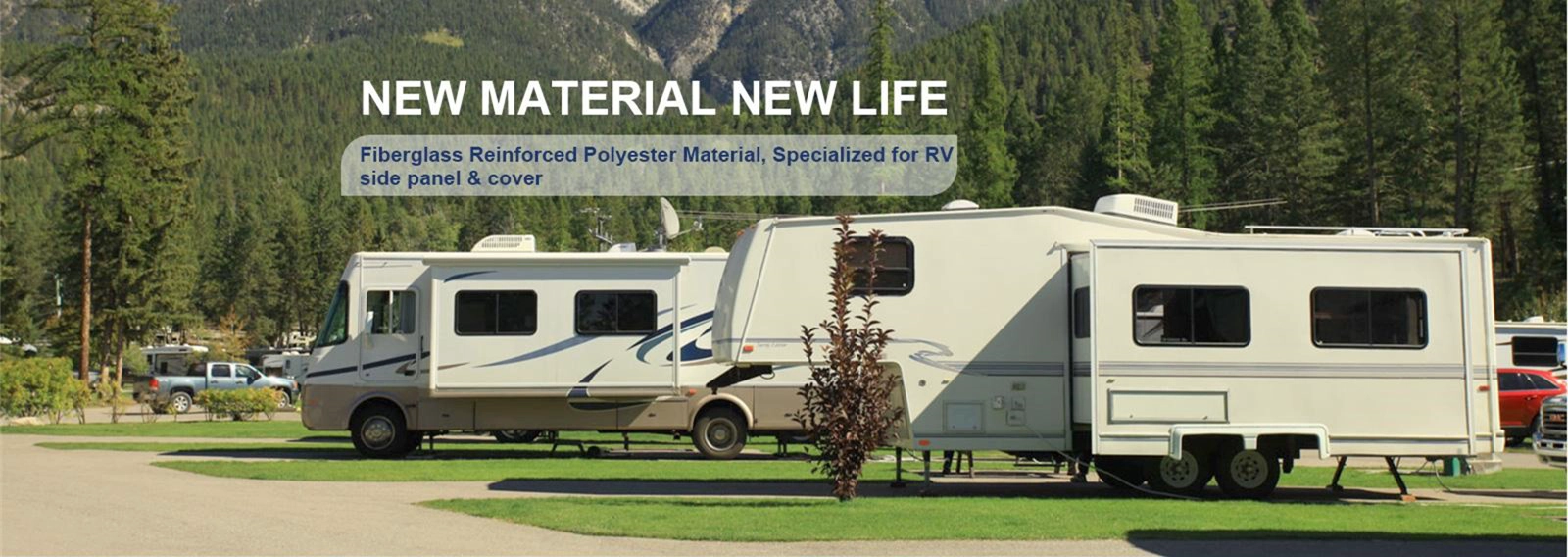
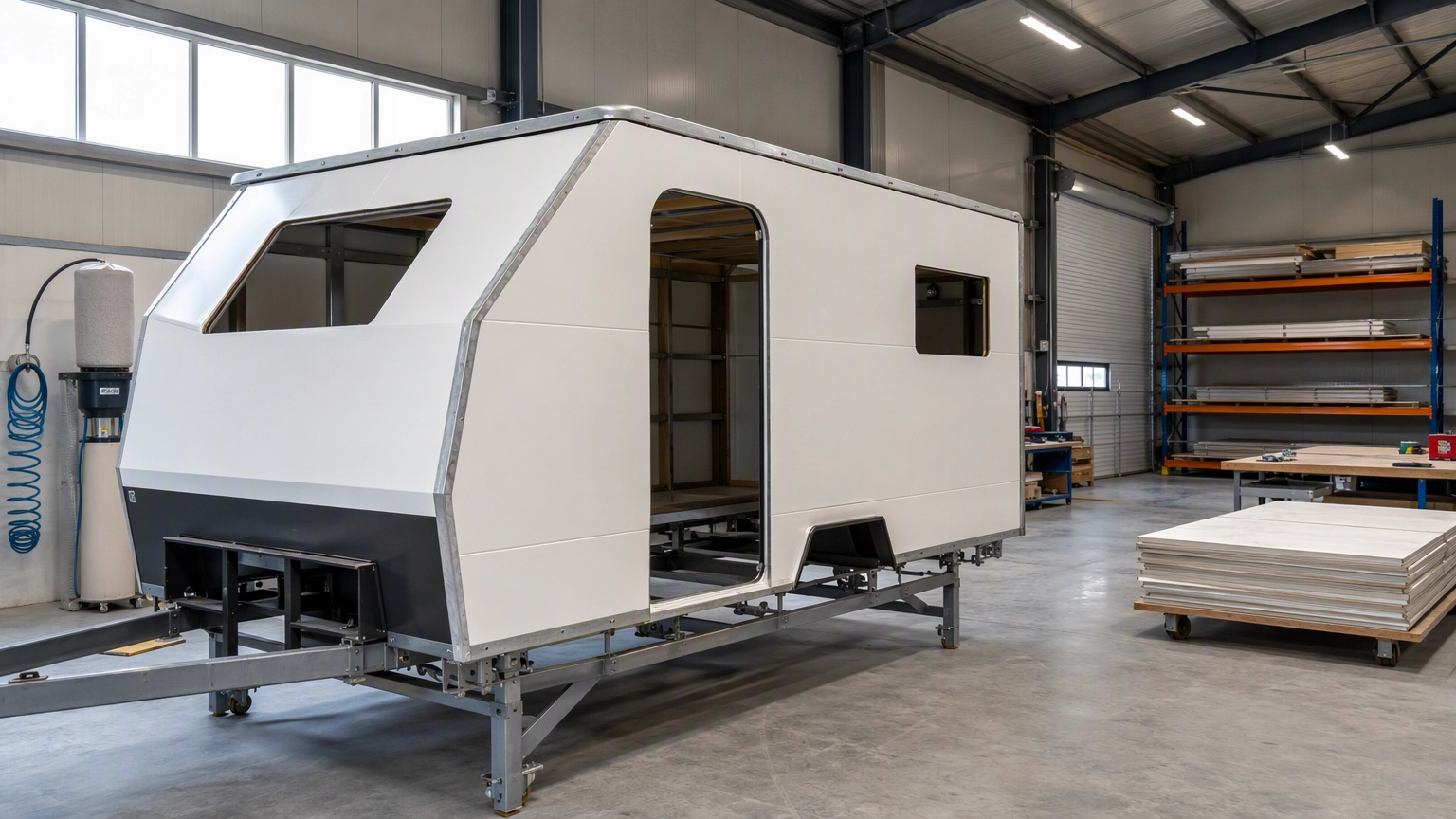
Walk through a camper trailer factory today and the body material tells you how the industry has moved. FRP sandwich panels, and they have quietly become the standard wall, roof and floor solution for off-road campers, caravans, teardrops, expedition trailers and food trailers.
1. What "FRP" actually means
FRP stands for fibre-reinforced plastic — also written GRP (glass-reinforced plastic) in Europe and Australia. Both describe the same family of material:
a reinforcement of glass fibre — chopped strand mat, woven roving or stitched fabric
a matrix of thermoset resin, usually unsaturated polyester
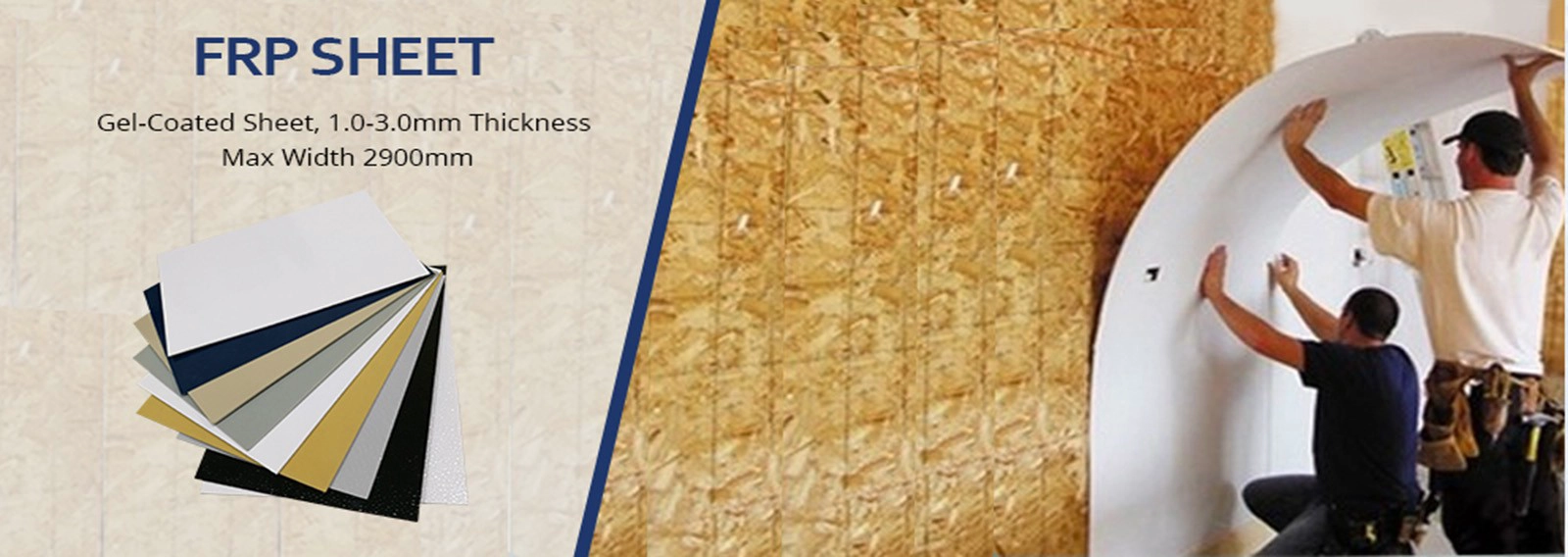
a gel coat on the visible face: a pigmented, UV-stabilised resin layer that carries the colour and the finish
The result is a sheet that behaves nothing like plastic film and nothing like steel. It is stiff, it takes impact without denting permanently, it cannot rust, and it does not absorb water. That combination is why it is the most widely used skin material in RV composite panels.
2. Anatomy of an FRP camper trailer panel
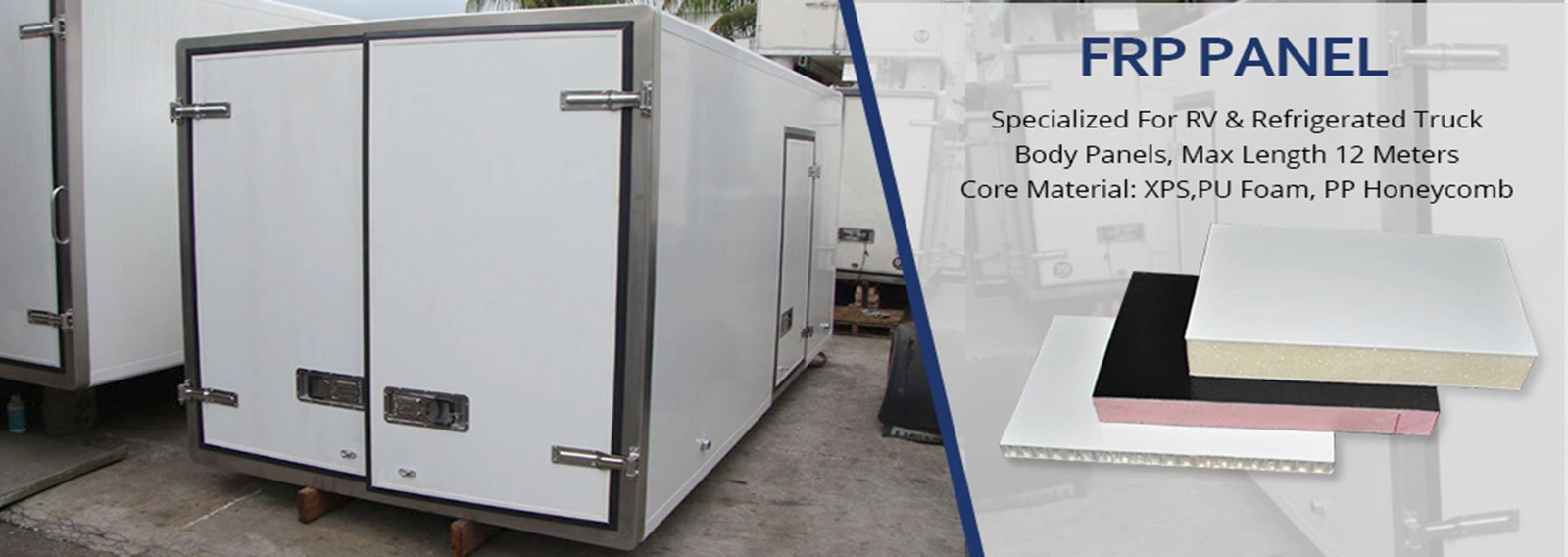
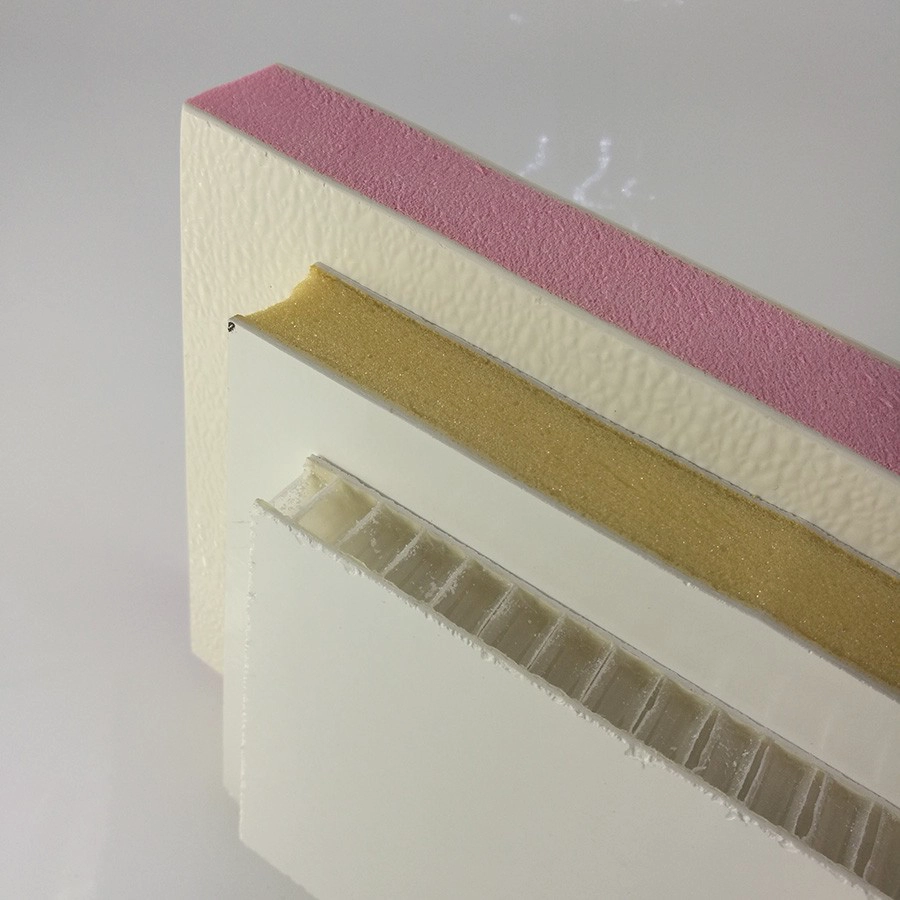
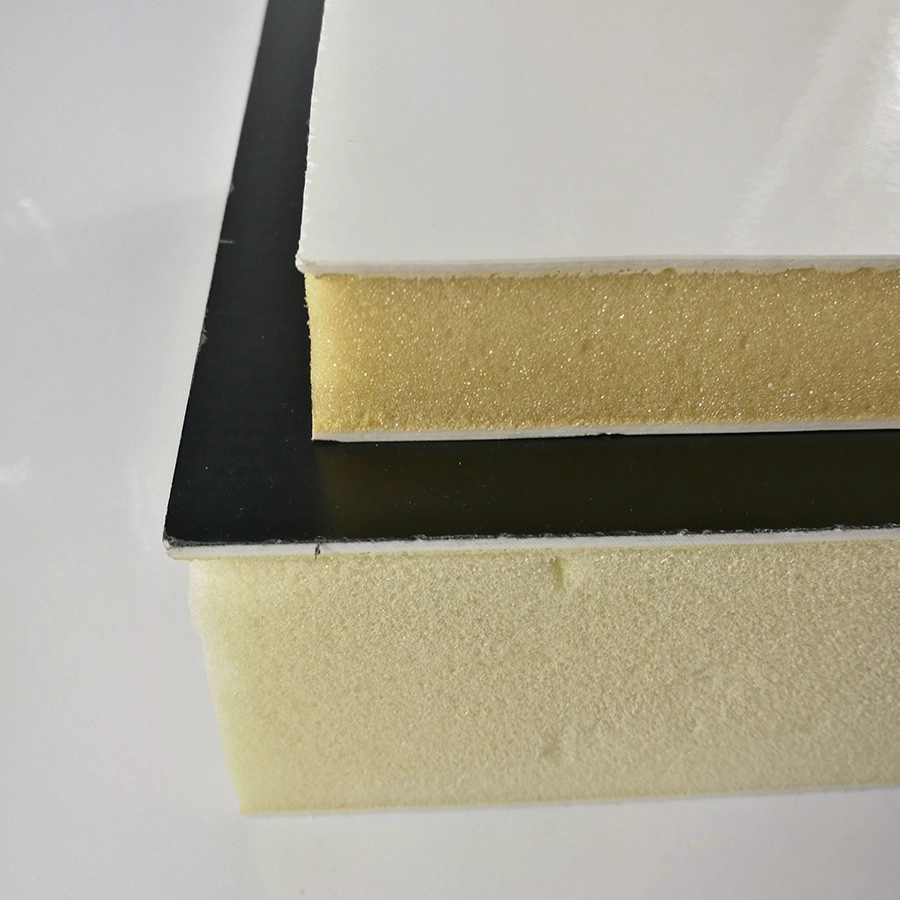
A camper trailer panel is not a single sheet. It is a sandwich: FRP skin + core + FRP skin, bonded into one rigid board.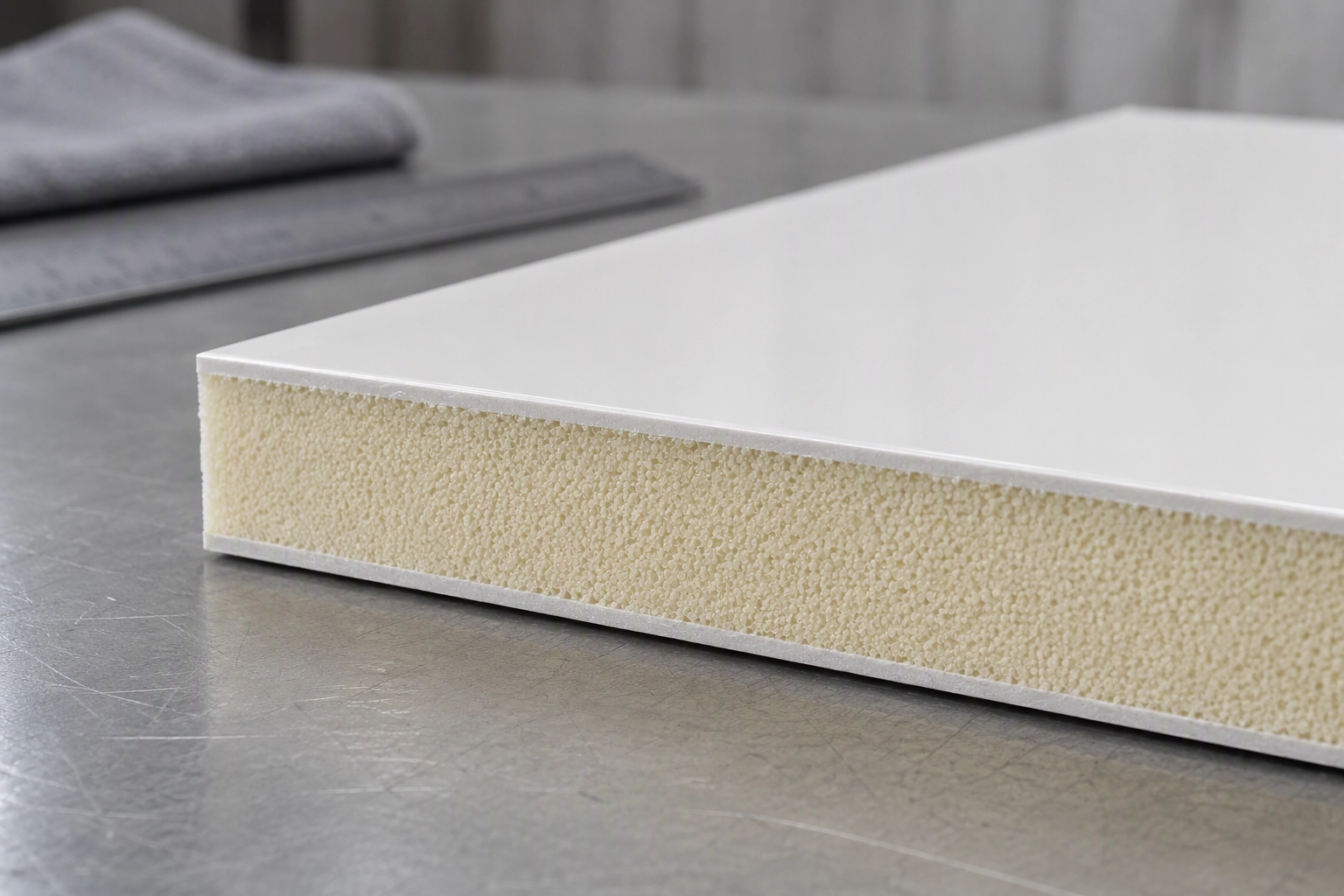
Cut cross-section of an FRP sandwich panel showing the gel-coated fibreglass skins and the closed-cell foam core
The two skins carry the bending load and take the abuse. The core holds the skins apart, which is what turns two thin sheets into a stiff structural panel — and gives the panel its insulation value. Between them, a structural adhesive bonds the assembly under heat and pressure so it cures as one piece rather than three.
The core is where most specification decisions live: XPS foam, PU foam, PP honeycomb, or — for interior furniture and non-insulated partitions — solid FRP or plywood.
For camper trailer walls, FRP skins are most commonly specified between 1.0 mm and 2.0 mm; FORE produces skins from 1.0 mm to 6.0 mm, so heavier gauges are available for off-road floors or a roof carrying solar and a roof-top tent.
3. Why builders keep switching to FRP
Weight without weakness. FRP skins have a density of roughly 1.5 g/cm³ — far below steel and well below aluminium on a strength-to-weight basis. Builders get a stiffer body while leaving payload for water tanks, batteries and gear. On an off-road trailer, payload is the whole product.
No rot, no rust, no delamination from moisture. Plywood delaminates. Aluminium corrodes at every fastener and reacts with steel. FRP absorbs almost no water (typically ≤0.5%) and is unaffected by road salt.
Impact behaviour and repairability. Where a metal skin dents and a timber skin splinters, FRP flexes and, when damaged, repairs with resin and glass patch — no panel replacement, no visible seam.
Thermal and acoustic insulation built in. A foam core is not an afterthought; it is part of the panel. Insulated walls reduce condensation on cold nights, cut the load on air-conditioning, and quieten road noise.
Fewer joints, faster builds. FRP sheets are produced in large formats — FORE panels run to 3.2 m wide and 12 m long — so a wall is often a single piece. Fewer joints means fewer water paths and fewer hours on the assembly line.
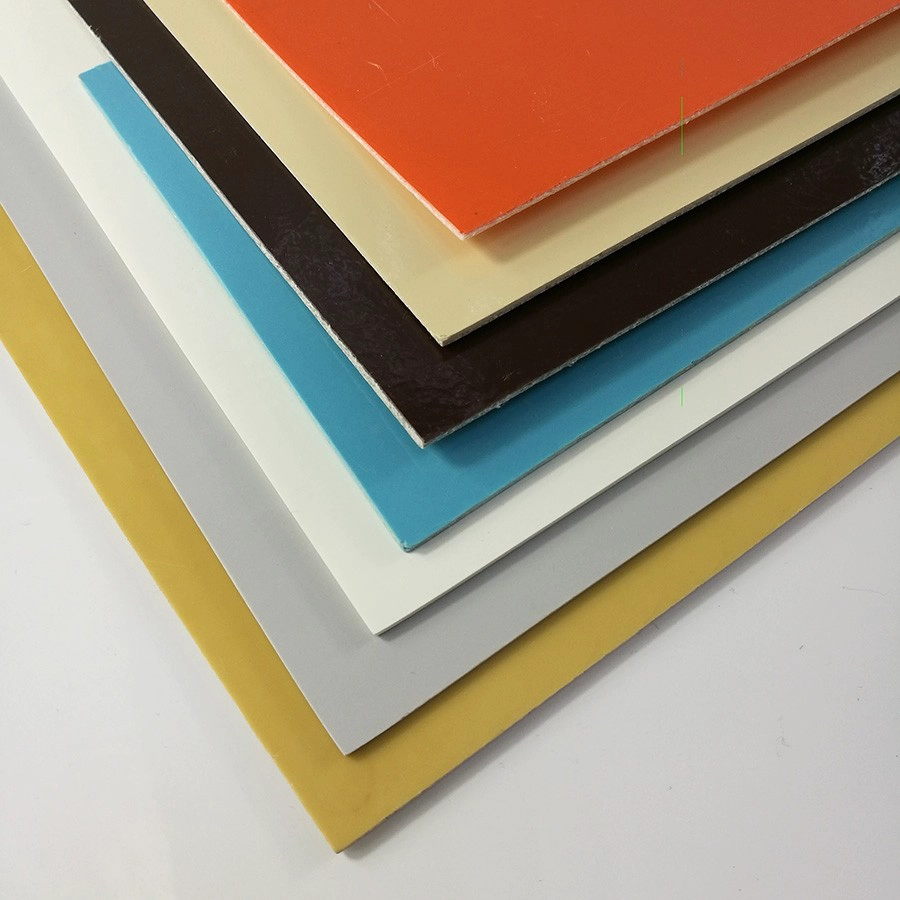
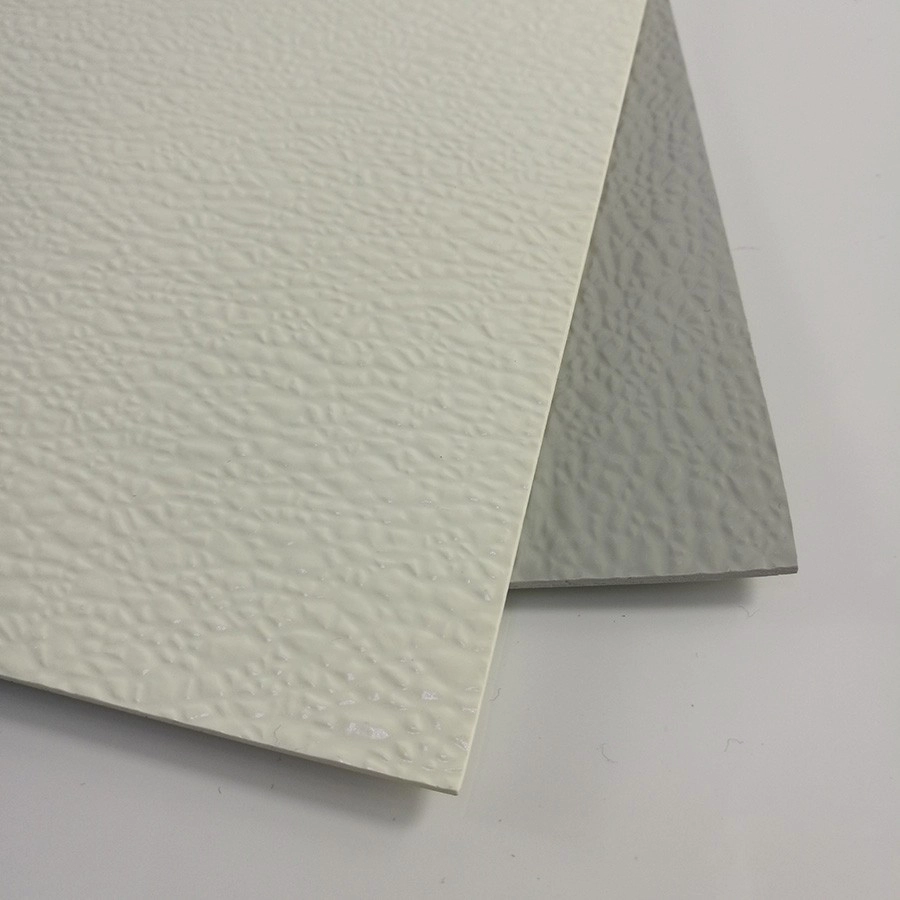
Finish straight out of the mould. Gel coat delivers colour and gloss in one layer, in any RAL shade, with matte and textured (cracked-ice) options for floors and high-traffic surfaces.
4. Where the panels go
Walls — 1.0–2.0 mm skins over a 25–50 mm foam or honeycomb core
Roofs — similar build-up, often with a walk-on-capable specification
Floors — heavier cores and thicker skins for point loading and chassis mounting
Doors, hatches and drop-down rear walls — single-skin FRP or light sandwich
Interior furniture and partitions — thin panel with plywood or light foam core
Wheel arch and underbody covers — single-skin FRP for impact and spray protection
5. Specification at a glance
| Parameter | Typical range |
|---|---|
| Face skin | Gel-coated FRP / GRP, 1.0–2.0 mm for trailer walls (FORE: 1.0–6.0 mm) |
| Core | XPS foam, PU foam, PP honeycomb, plywood, solid FRP |
| Panel thickness | Set by the builder's insulation and stiffness target |
| Panel width | Up to 3.2 m |
| Panel length | Up to 12 m |
| Surface | Glossy gel coat, matte, or cracked-ice texture |
| Colour | Any RAL shade, custom matching |
| Skin density | ~1.5 g/cm³ |
| Tensile strength | ≥100 MPa |
| Flexural strength | ≥150 MPa |
| Water absorption | ≤0.5% |
| Service temperature | −40 °C to +120 °C |
| Fire performance | Standard or flame-retardant grades |
6. Frequently asked questions
Are FRP panels waterproof? The panel itself is — skin water absorption is typically ≤0.5%. What decides whether a trailer stays dry is the detailing: edge sealing, sealant beads and trims.
Can a damaged panel be repaired? Yes. Damage that does not break the core is repaired by grinding back, laminating glass and resin, and finishing — no panel removal required.
How thick should a camper trailer wall be? It depends on your insulation target and the span between frame members. Send your frame layout and target R-value and the build-up can be calculated rather than guessed.
7. Start with your frame drawing
FRP camper trailer panels are specified, not picked off a shelf. Send FORE your trailer dimensions, frame spacing, insulation target and intended core, and we will come back with a recommended build-up, sample and quotation.